The Quantum Principles Challenge
Replicate a pivotal experiment. Advance physics. Make history.
A New Frontier in Quantum Measurement
Recent experimental results show a striking phenomenon: short measurement times reveal quantum behavior, while long measurement times reveal classical behavior. A single IV curve — measured at 0.64 ms and 20 ms — captures this transition vividly.
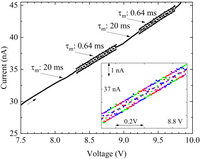
The Quantum Principles (QP) Challenge invites research groups worldwide to replicate this curve using a single molecule junction at ambient conditions. The first team to publish a successful replication in a reputable peer reviewed journal wins.
Why Participate?
What’s Involved?
Who Should Join?
• Physics departments
• Nanoscience and materials groups
• Smaller institutes seeking a high visibility project
• Teams with expertise in fabrication, electronics, measurement, and data analysis
Support for Participants
• Documented and direct guidance available
• A limited number of high quality BBAs provided to new teams
• Visit and seminar for the winning group
• The winning team receives a $10.000 replication grant.
Be Part of the Discovery
Physics advances when teams take bold, coordinated steps. Join the QP Challenge and help shape the next chapter in quantum measurement.
May the best team win. — Chris Muller
 | The QP Challenge v2.pdf (212.02KB) |